
Somerset and the Iron Age
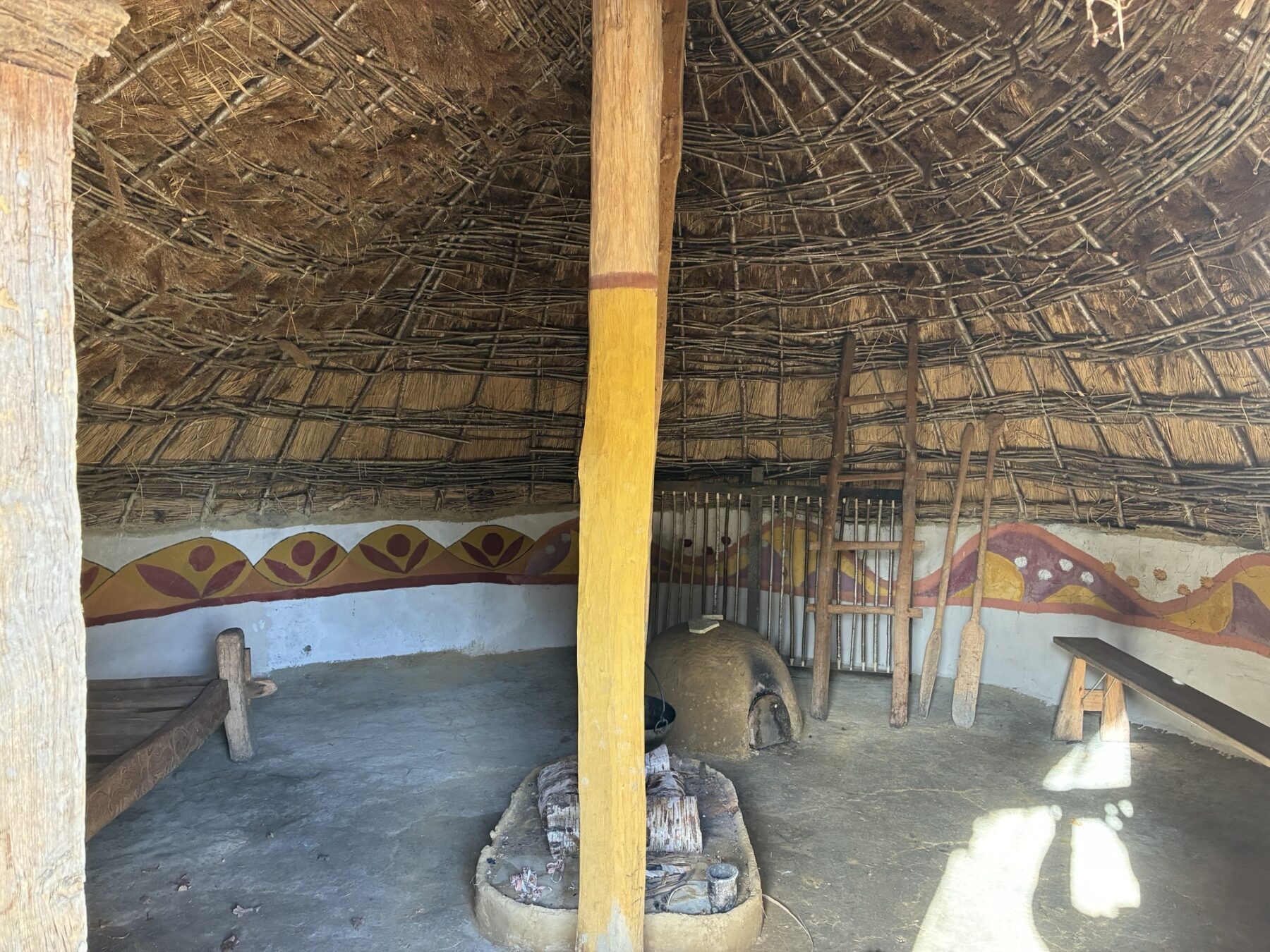
A new Iron Age Roundhouse reconstruction has been completed at Avalon Archaeology based on evidence from the Glastonbury Lake Village. Here we explore what life might have felt like in a thriving wetland settlement such as the Glastonbury Lake Village during the Iron Ages.
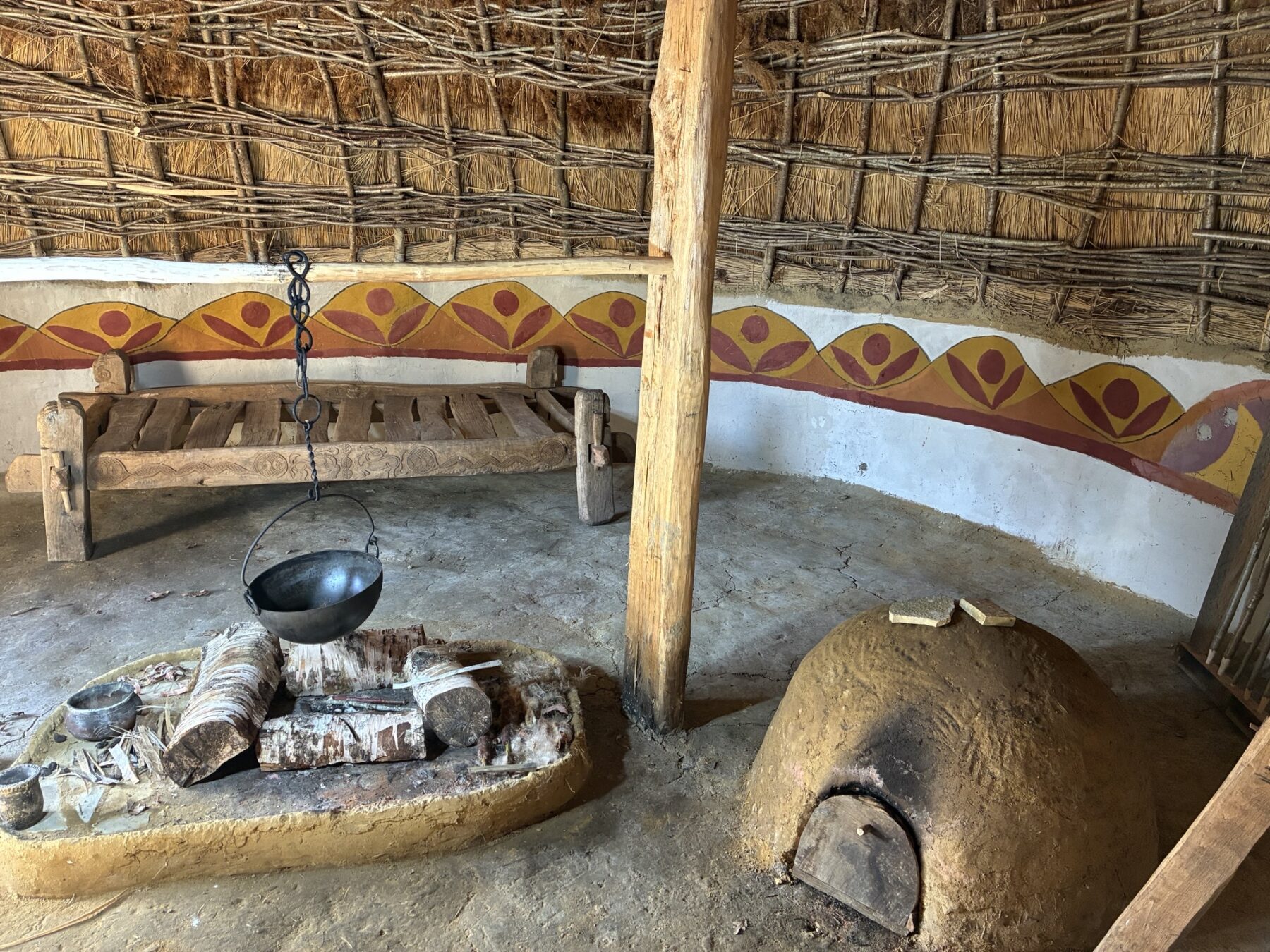
Somerset Landscape during the Iron Age
During the Iron Age (750 BC – AD 43) Somerset landscape consisted of wet woodlands – alder, oak, willow and birch – reedswamp, open water and raised ‘islands’ of drier land. 150 of these ‘islands’ formed the Lost Somerset Archipelago.
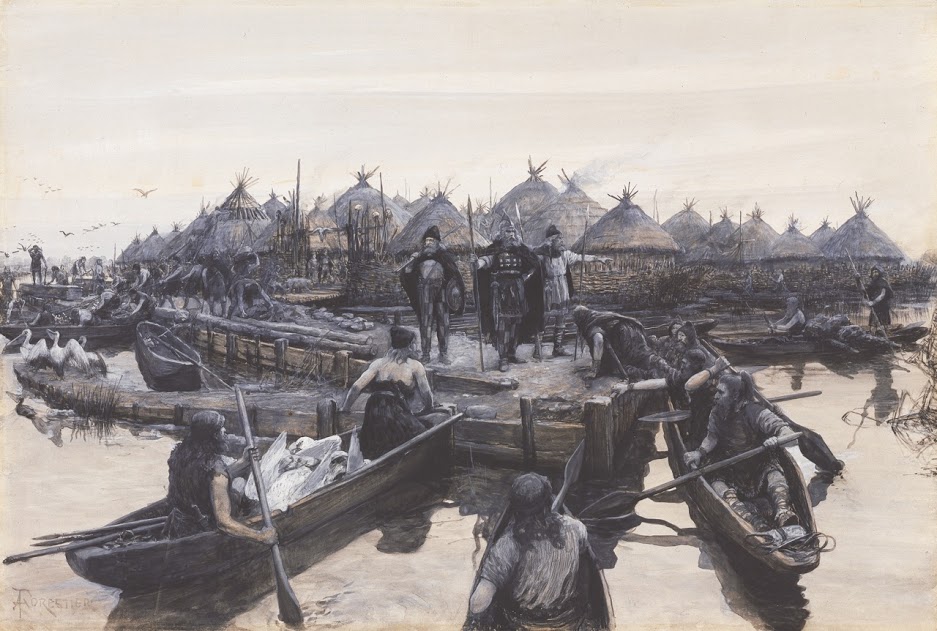
In Neolithic and Bronze age times (before the Iron Age) wooden trackways were built to connect these islands and traverse the wetlands, such as the Sweet Track (built 3806 BC). As the valleys grew wetter dugout canoes replaced trackways. One such canoe from the Iron Age was found in the Glastonbury Lake Village. A canoe from Shapwick is currently on display at the Museum of Somerset.
These waterlogged conditions have preserved an archaeological treasure trove of finds, producing the most complete evidence of everyday objects used by prehistoric people. Among the most significant discoveries is the Glastonbury Lake Village, unearthed by Arthur Bulleid. It remains the best-preserved Iron Age village yet found in the UK.
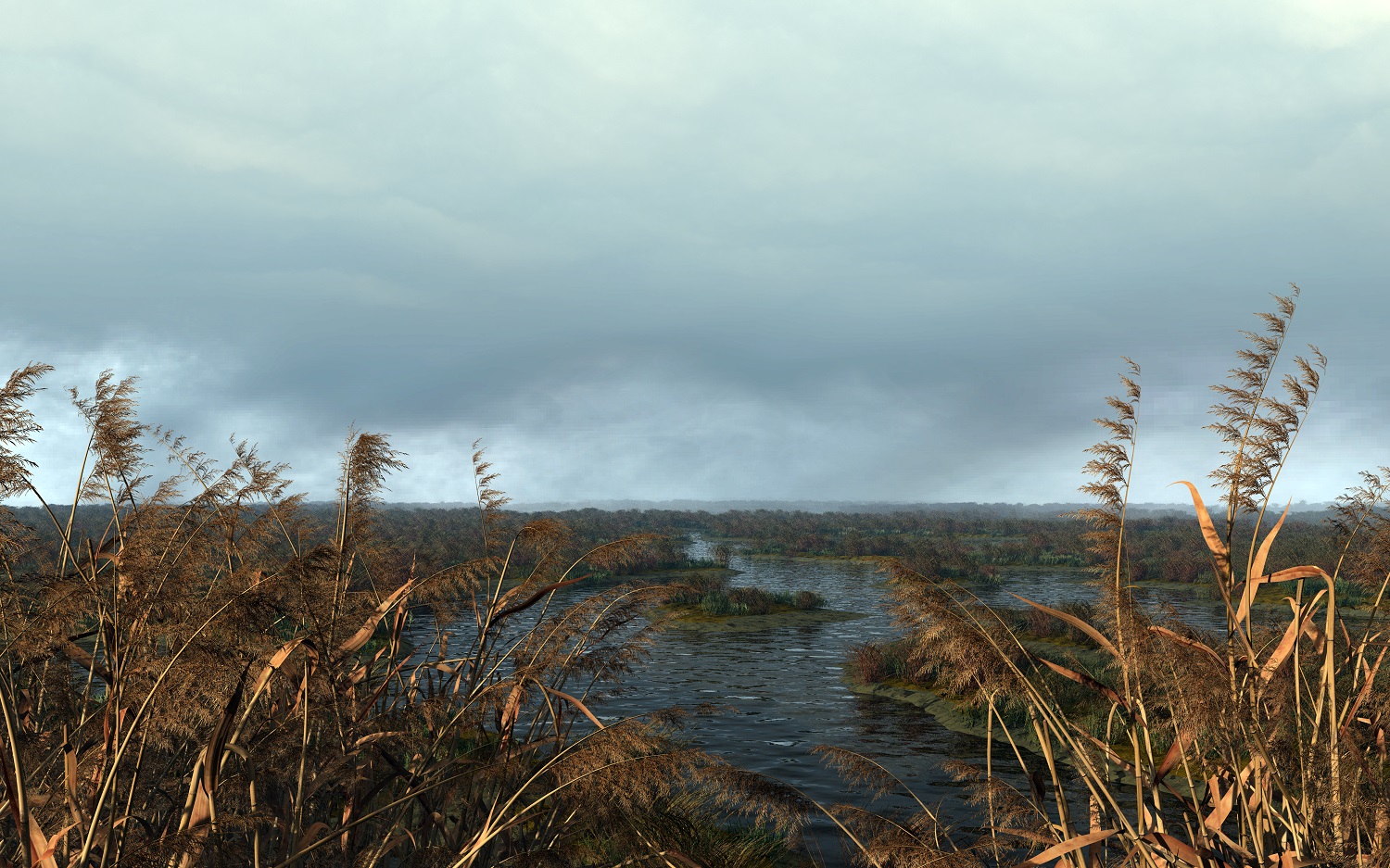
Glastonbury Lake Village
Glastonbury Lake Village was built at the edge of a patch of willow, birch and alder trees within a large swamp of reed, open water and wet woodland. The settlement was only accessible via water. It featured up to 14 roundhouses and housed around 200 people. It was occupied between 140 and 50 BC. The surrounding wetlands provided protection, a rich array of food and trade via the water borne trade route to the Severn estuary.
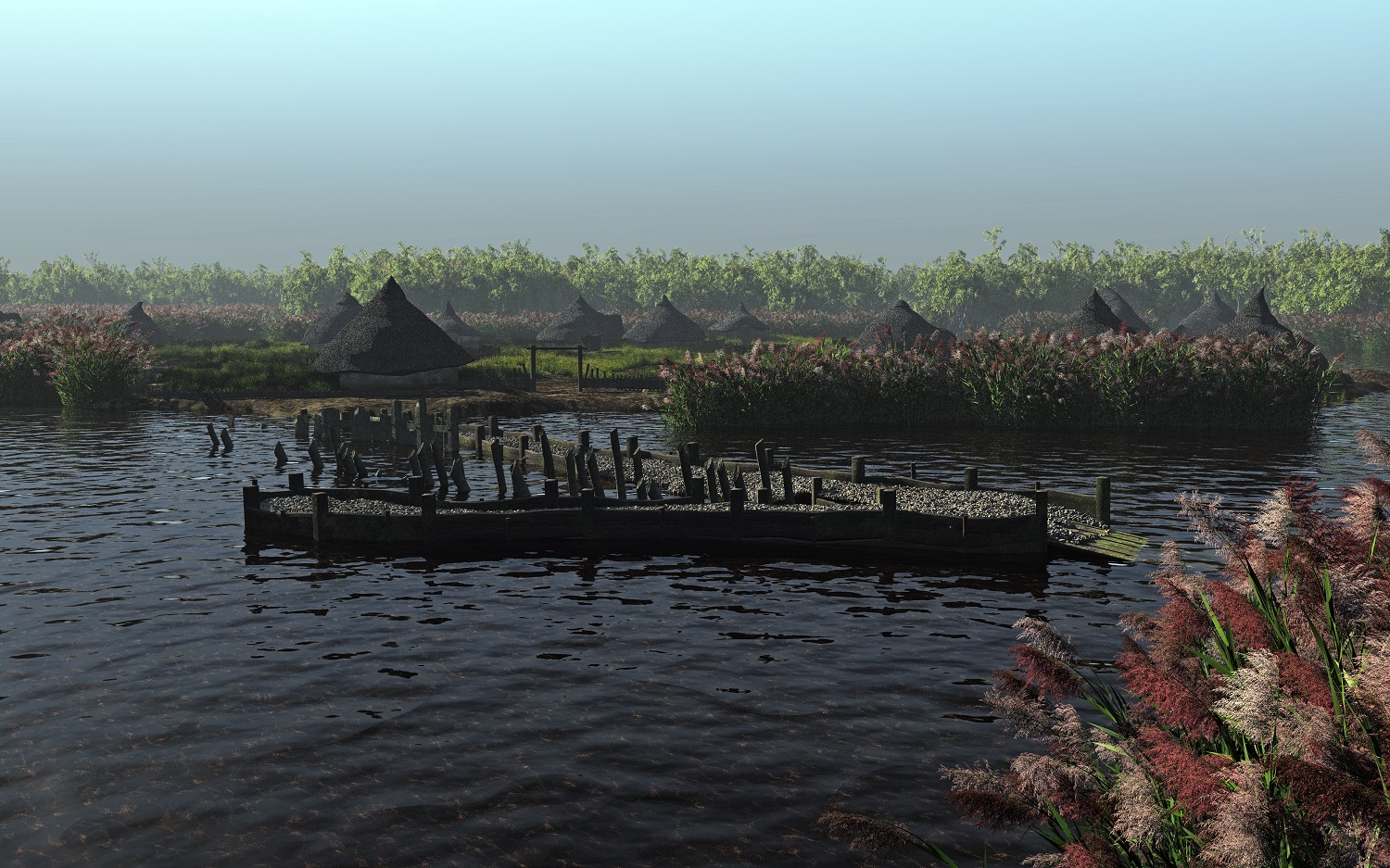
There was also a canoe causeway on the side of the settlement. This location also provided a rich array of resources for food or trade: fish, eels, frogs and ducks, pelicans, cranes, swans, herons, bitterns, otters and beavers as well as many edible plants. Lead sinkers for nets and clay sling shots suggest how these animals were caught. Dryland animals were also eaten, sheep, cattle, pig, horse and dog. Crops such as wheat, barley, beans, and peas were consumed, likely acquired through trade, possibly in exchange for fish or wildfowl. Roe and red deer, wild boar, fox and wildcat were caught in the dry woodlands while puffin, cormorant and sea eagle indicate contact with coastal areas.
Chickens or pigs may have been kept within the settlement, but larger animals such as cattle would have had to graze on the surrounding lands. Spelt, wheat and barley were stored on site as spikelets rather than individual grain.
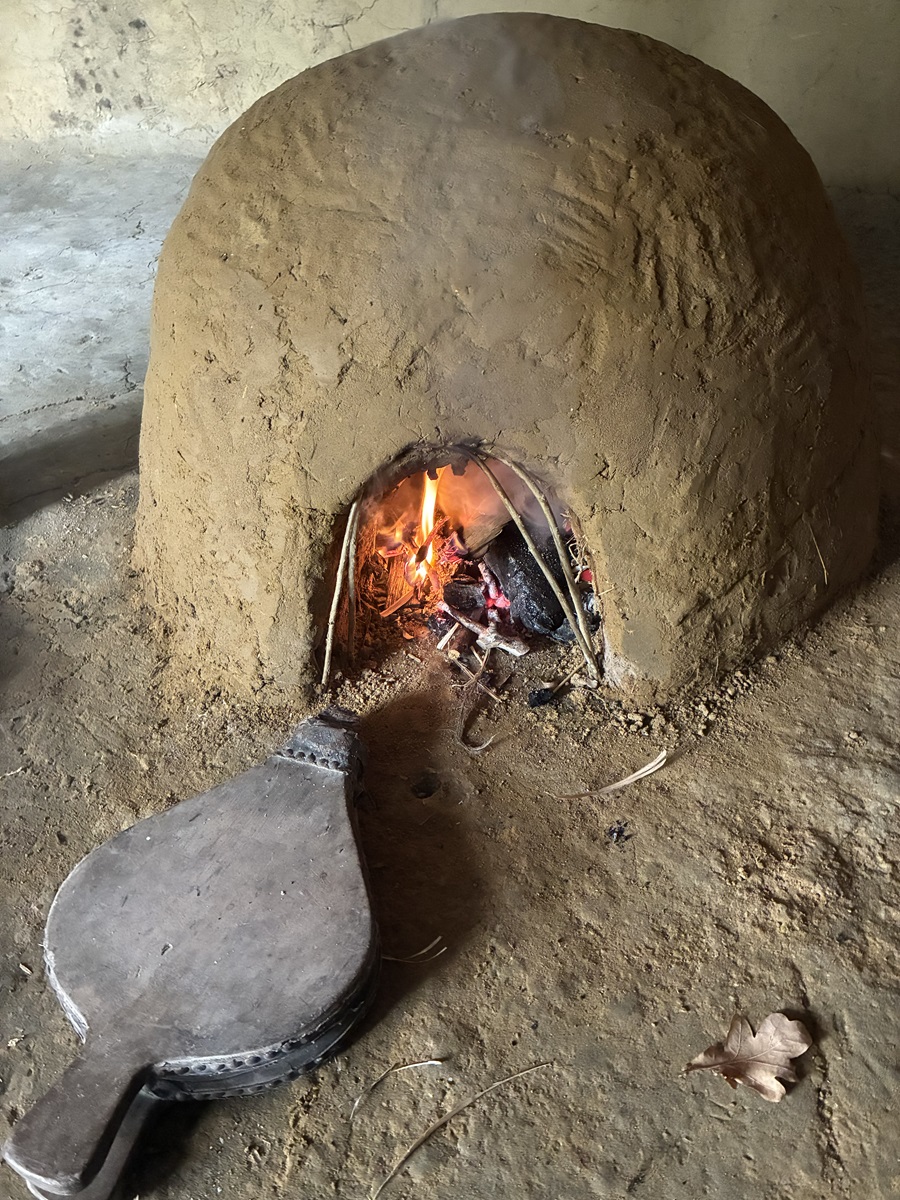
Living in an Iron Age Roundhouse
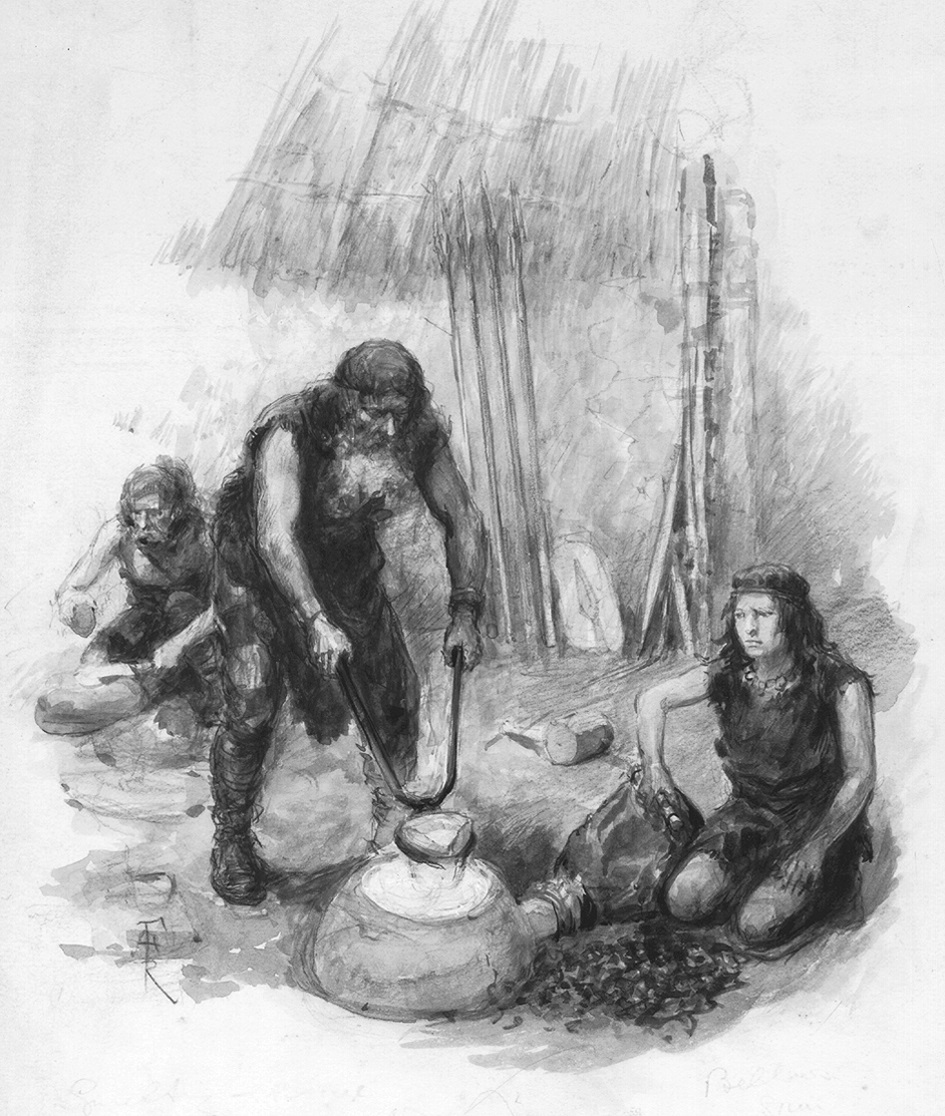
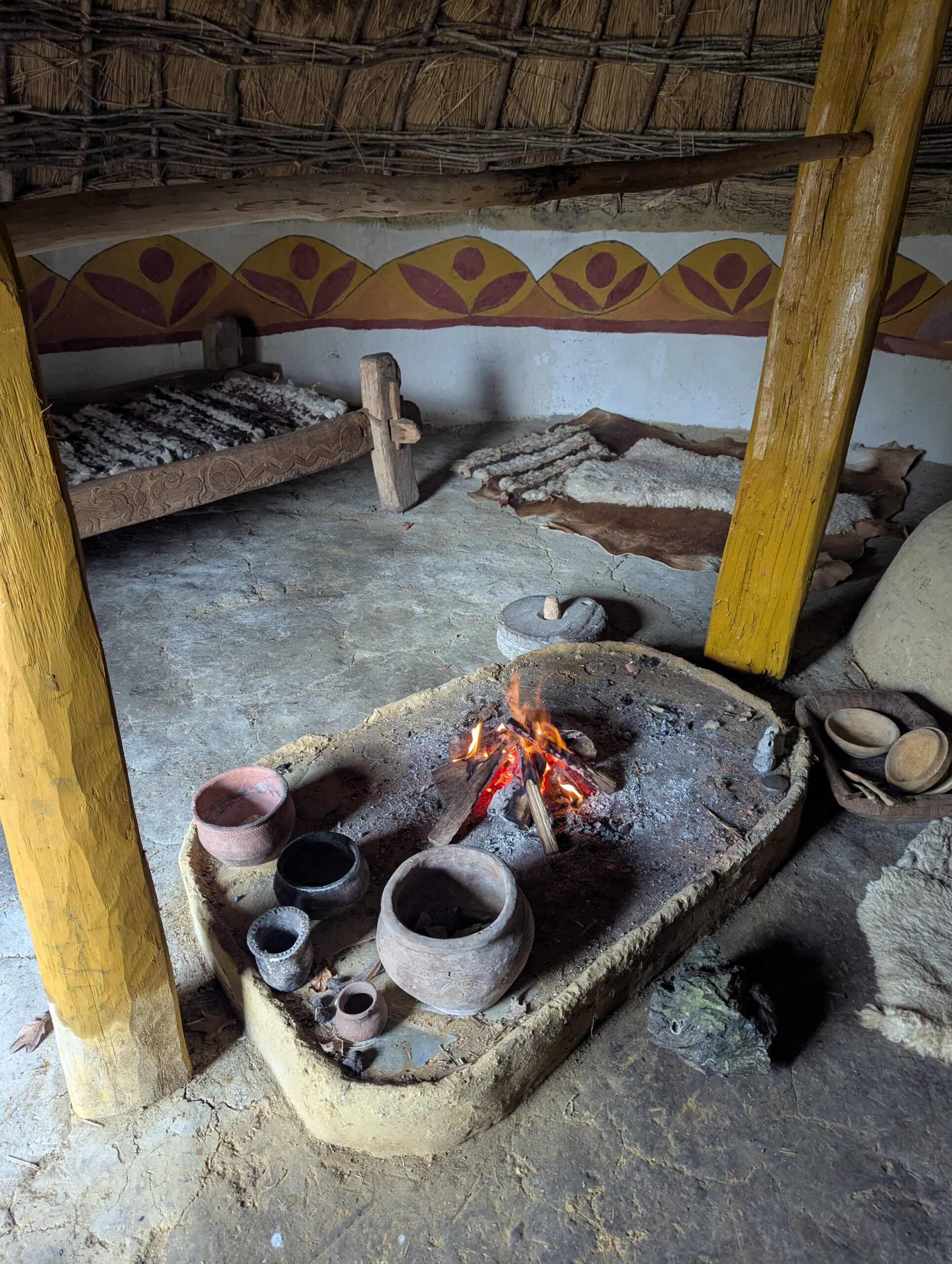
Each roundhouse featured a central hearth, often accompanied by a small bread oven. Households had a variety of pots for cooking and food storage, along with wooden containers such as stave-built buckets, turned bowls, and steamed bentwood boxes. Metal containers like cauldrons and bowls were rarer and more precious. Many items were decorated with elaborate designs that may have held symbolic meaning.
Each family would have had a range of everyday tools and equipment, including looms for weaving cloth and rotary querns for grinding grain for bread. Woodworking and metalworking were practiced throughout the settlement. Although little is known about furniture, the inhabitants were skilled woodworkers capable of crafting beds and seats.
A wealth of archaeological finds from the village offers insights into daily life on the settlement. These include bronze axes, pottery, wooden bows, paddles, and prehistoric canoes. Tools, ladles, chopping boards, ladders, wheel parts, and a wooden frame for stretching skins were uncovered. Some of these finds from Glastonbury Lake Village and Meare Lake Village can be seen on display at The Museum of Somerset, including a dugout canoe.
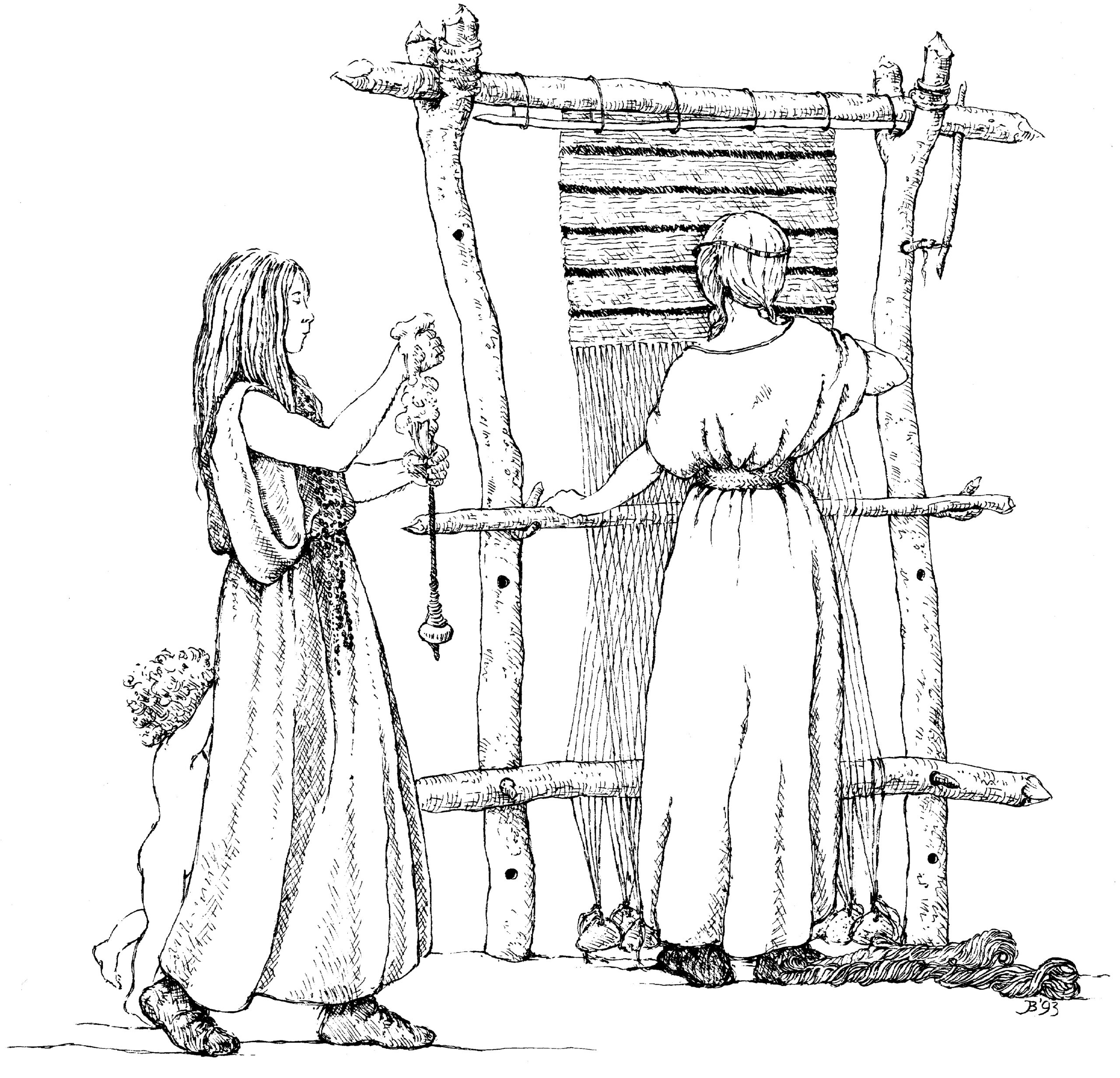
Personal ornaments found include bronze and iron brooches, pins, rings, shale armlets, glass beads, tweezers, and a bronze mirror. Spindle whorls and loom weights indicate that cloth was produced in the village. Evidence of craft activities—such as spinning, weaving, and making artefacts from bone, antler, shale, glass, iron, and bronze—was also found at Meare Lake Village nearby. Some of these objects can be seen on display at The Museum of Somerset.


Visiting Avalon Archaeology
The archaeology of Glastonbury Lake Village offers an extraordinary glimpse into Iron Age life in Somerset. The newly complete Iron Age reconstruction at Avalon Archaeology allows visitors to step inside history and explore how people lived over two millennia ago.
- Open to visitors every Sunday from 10.00 am – 4.00 pm and Saturdays during the school holidays.
- The reconstruction is part of four reconstructions, including a Saxon longhall, a Roman villa dining hall, and a Viking trading ship. The site also displays the oldest surviving archaeological excavation hut in the UK.
- For a deeper experience, book a guided tour.
- Try some Iron-Age inspired family activities to extend the learning at home.
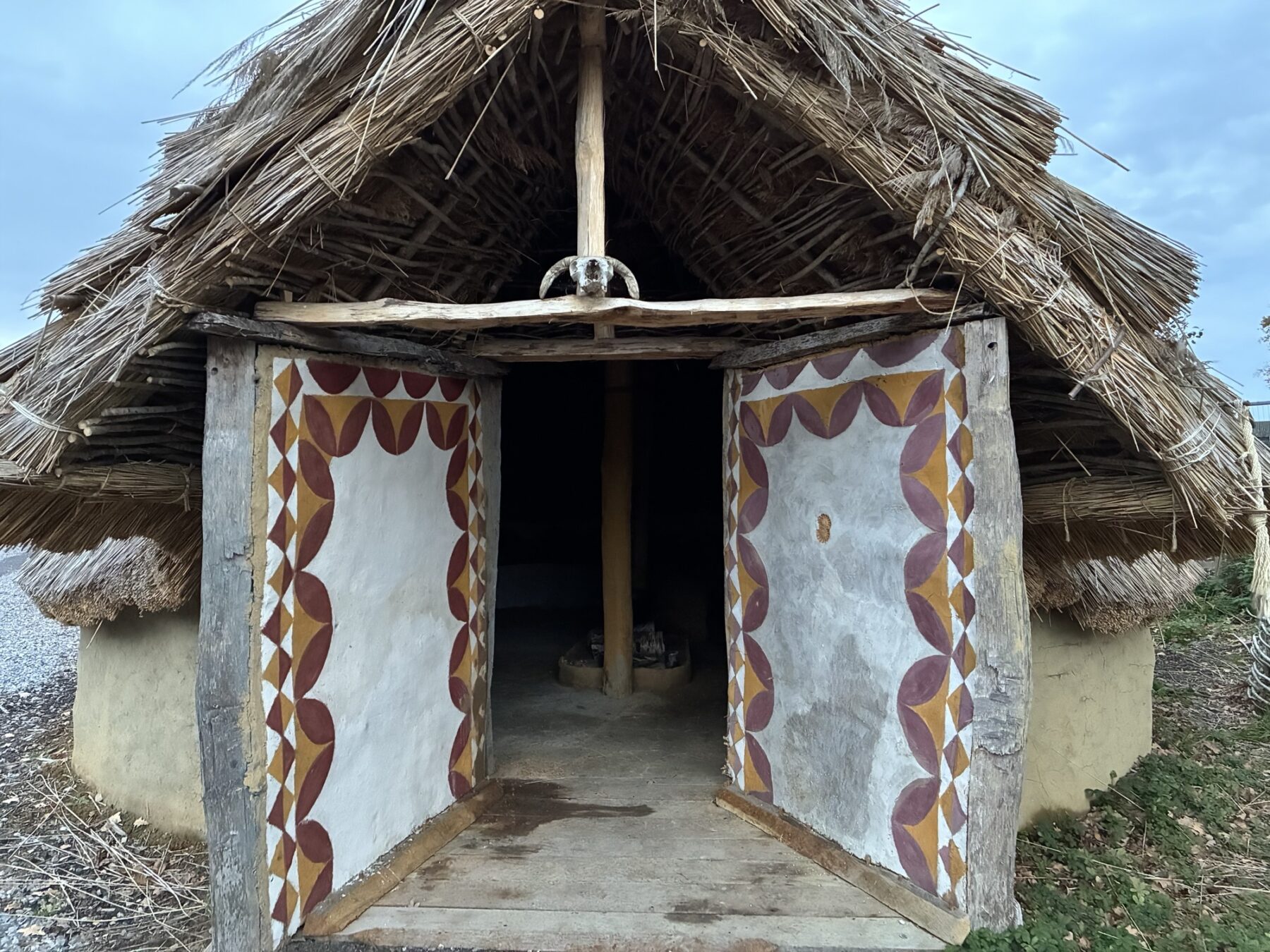
Join us for Spring Equinox (21-22 March) and see the official opening on 21 March at 11.30 am with a special ribbon cutting. Across the weekend there’ll be ancient woodworking in action, a hand-carved dugout canoe on display, and family activities such as building a section of the Sweet Track using Neolithic tools.